


Charlotte Healthcare Fraud Defense Lawyer
Respected Charlotte Healthcare Fraud Defense Lawyers
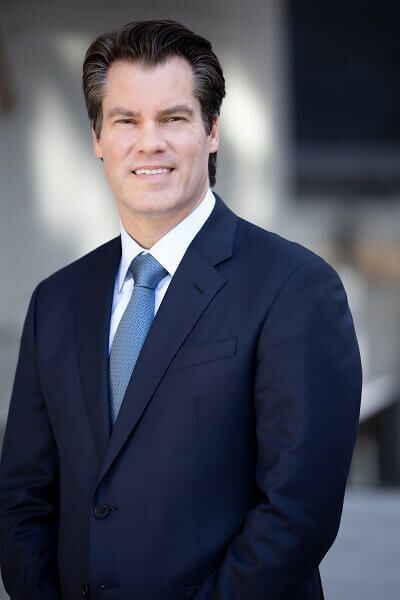
Charlotte Healthcare Defense Defense Team Lead
6047 Tyvola Glen Circle
Charlotte, NC 28217
704-842-3501
Healthcare providers in Charlotte are increasingly being targeted in federal investigations. The U.S. Department of Justice’s (DOJ) newly-formed Opioid Fraud and Abuse Detection Unit is specifically targeting central North Carolina, and those providers whose practices involve prescription medications are particularly susceptible to facing federal inquiries.
When the U.S. Department of Justice (DOJ) announced that it was forming a new Opioid Fraud and Abuse Detection Unit to aid in the government’s fight against opioid fraud and abuse in August 2017, it identified 12 regions in which it would be targeting healthcare providers for enforcement. One of these regions was central North Carolina, including Charlotte and the rest of the state’s I-77 corridor.
But, while Charlotte-area providers who prescribe, dispense, and administer opioid medications may be among those who are at the greatest risk for being targeted in federal healthcare fraud investigations, they are by no means the only ones who need to be concerned. All types of providers are being targeted in healthcare fraud iprobes with increasing frequency, and federal prosecutors are aggressively pursuing both civil and criminal charges.
Put our highly experienced team on your side

Dr. Nick Oberheiden
Founder
Attorney-at-Law

Lynette S. Byrd
Former DOJ Trial Attorney
Partner

Brian J. Kuester
Former U.S. Attorney
Hon. Kevin McCarthy
55th Speaker, U.S. House of Representatives (ret.)
Government Consultant

Mike Pompeo
Of Counsel
Former U.S. Secretary of State
John W. Sellers
Former Senior DOJ Trial Attorney
Linda Julin McNamara
Federal Appeals Attorney

Nicholas B. Johnson
Former Prosecutor
Roger Bach
Former Special Agent (DOJ)

Chris J. Quick
Former Special Agent (FBI & IRS-CI)
Michael S. Koslow
Former Supervisory Special Agent (DOD-OIG)
Ray Yuen
Former Supervisory Special Agent (FBI)
Experienced Legal Representation for Charlotte, NC Healthcare Providers
At Oberheiden, P.C., our law firm is devoted to representing healthcare providers in fraud-related matters. With a team that includes several former DOJ healthcare fraud prosecutors, we are well-positioned to represent licensed medical professionals, executives, directors, facilities, medical practices, and businesses facing allegations of prescription drug fraud and other serious offenses. While many of these cases are civil in nature – and we seek to keep our clients’ investigations civil whenever possible – criminal accusations are also common. Unfortunately, both types of investigations have the potential to lead to crippling financial penalties, license revocation, and healthcare program exclusion.
We represent individuals and corporate clients in all aspects of federal healthcare fraud investigations and both civil and criminal prosecutions, including:
- Whistleblower Claims (qui tam defense)
- Letters from the U.S. Attorney’s Office
- Civil Investigative Demands (CIDs)
- Grand Jury Subpoenas
- Department of Health and Human Services Office of Inspector General (OIG) Subpoenas
- Requests for Depositions and Subpoenas to Testify in Court
- Medicare Fraud and, Medicaid Fraud and Audits
- Centers for Medicare and Medicaid Services (CMS) and State Licensing Board Matters
- DEA and Prescription Investigations
Our healthcare defense team is led by partner Dr. Nick Oberheiden. Nick Oberheiden has focused his practice in the area of healthcare fraud defense, has represented providers across the country, and who has appeared multiple times as an expert guest or commentator on media outlets.
“Our experience with [Oberheiden, P.C.] was overwhelmingly positive! We recently brought a range of complex legal issues to the table, which they responded to with a systematic, prudent approach. Throughout our work together, Oberheiden, P.C. served as an invaluable source of practical guidance and legal leadership. We would recommend them highly and without reservation to anyone.” – Healthcare Provider, Firm Client
“We hired Dr. Oberheiden and his team to pursue a complex federal case for us. Commitment, service, and results were beyond expectation. We cannot thank Nick and the other attorneys at [Oberheiden, P.C.] enough.” – Healthcare Provider, Firm Client
Meet the entire healthcare fraud defense team at Oberheiden, P.C.

Our Areas of Practice
If you have been contacted by federal authorities with regard to your healthcare business or medical practice, it is imperative that you seek legal representation immediately. Taking an active role in the investigative process is the best way to address your chances of facing civil liability or a criminal indictment; but before you do anything, you need to have a clear strategy in place.
The attorneys on our defense team can provide you with experienced direction and can begin communicating with the government on your behalf immediately. A Charlotte healthcare fraud defense lawyer can help you avoid mistakes that could put your business or practice (and potentially even your personal freedom) in jeopardy. We have over 100 years of combined experience in a wide array of matters.
1. Billing and Coding Fraud
Although the Medicare, Medicaid, and Tricare billing regulations are excruciatingly complicated, this does not provide an excuse for non-compliance. Billing and coding errors are among the most common allegations in healthcare investigations, with both intentional and unintentional mistakes having the potential to lead to significant financial penalties and program exclusion. In criminal cases involving allegations of intentional billing fraud, licensed practitioners, executives, administrators, and staff members can also face federal imprisonment.
2. Kickbacks, Bribes, and Rebates
Under the federal Anti-Kickback Statute (AKS) it is illegal to offer, solicit, pay, or accept “any remuneration (including any kickback, bribe, or rebate) directly or indirectly, overtly or covertly, in cash or in kind to any person to induce,” a purchase, lease, or patient referral involving funds from a federal healthcare benefit program. While Anti-Kickback Statute investigations can take many forms, the majority of cases involve alleged payment of referral fees in relation to services rendered or medications supplied to a Medicare, Medicaid, or Tricare program beneficiary. The AKS includes provisions for both civil and criminal penalties. Defendants found guilty of federal offenses can face potential criminal fines of $25,000 and five years of imprisonment for each individual violation. Contact our Charlotte healthcare fraud defense attorneys to discuss your case.
3. Unlawful Physician Self-Referrals
The Stark Law also prohibits unlawful compensation arrangements, but it applies specifically to financial relationships between physicians and their related entities. A related entity is one with which a physician has either a direct or indirect compensation or investment relationship. The Stark Law applies to so-called “self-referrals” for designated health services, including:
- Clinical laboratory services
- DME and medical supplies
- Home health services
- Imaging
- Inpatient and outpatient hospital services
- Outpatient pathology
- Outpatient prescriptions
- Parenteral and enteral nutrients, equipment, and supplies
- Physical therapy
- Prosthetics, orthotics, and related supplies
- Radiology and radiological therapy
The Stark Law establishes strict liability for civil penalties (meaning that proof of knowledge or intent is not required), and physicians and their related entities can face additional fines of $15,000 for knowing violations.
4. False Claims Act Investigations
Many healthcare fraud cases involve allegations under the False Claims Act (FCA). The FCA makes it a federal offense to submit any “false or fraudulent” request for payment to the government, and it includes provisions for both civil and criminal penalties. As a result, providers that make billing mistakes will routinely be targeted under the False Claims Act, and kickbacks and referral fees can be prosecuted as FCA violations as well.
There are two ways the government can initiate legal action under the False Claims Act: (i) it can pursue an investigation independently (often based upon analysis of a provider’s billing data); or, (ii) it can take action in response to a whistleblower complaint. Each type of investigation has its own unique procedures and implications, and we have significant experience representing healthcare providers in both types of FCA investigations. Talk with a knowledgeable Charlotte healthcare fraud defense attorney.
5. Medically-Unnecessary Services, Supplies, and Equipment
Medicare, Medicaid, Tricare, and other healthcare benefit programs are intended to provide reimbursement for medically-necessary services delivered to program beneficiaries. However, what constitutes medical necessity for purposes of program billing is not necessarily (or even often) the same as what constitutes medical necessity for purposes of quality patient care. Services, supplies, and equipment that may be deemed medically unnecessary and trigger healthcare fraud investigations include those:
- Provided in the inpatient setting beyond the program-approved length of stay,
- Provided in excess of the program limits for reimbursement,
- Provided necessary care resulting from unnecessary procedures (such as cosmetic surgery), and
- Provided in the hospital when a lower-cost treatment option is available.
6. Services, Supplies, and Equipment Not Provided
Billing for services, supplies, or equipment not actually provided is perhaps the most straightforward example of healthcare fraud. However, many providers will face allegations of so-called “phantom billing” unjustifiably. Lack of documentation, inadequate recordkeeping, and administrative billing errors are all issues that can lead to apparent billing violations. And while these are issues that likely require correction – they should not subject honest healthcare providers to federal prosecution.
7. Prescription Drug Fraud
Along with the DOJ’s Opioid Fraud and Abuse Detection Unit, numerous other federal authorities are involved in investigating and prosecuting Charlotte-area healthcare providers suspected of having involvement in prescription drug fraud schemes. CMS, the OIG, the Drug Enforcement Administration (DEA), the Medicare Fraud Strike Force, and others routinely pursue investigations targeting legitimate healthcare providers suspected of:
- Dispensing more medication than was prescribed
- Drug shorting and refill schemes
- Falsifying prescriptions
- Illegally importing prescription medications
- Inaccurately reporting test results in order to prescribe medically-unnecessary drugs
- Prescribing medications without an in-person exam
- Prescription drug diversion
- Selling fraudulent prescriptions
8. Falsification of Patient Records and Inadequate Recordkeeping
Falsification of records and inadequate recordkeeping are also common allegations in healthcare fraud investigations. Like other alleged forms of healthcare fraud, these cases are often more complicated than initially meets the eye. Initial allegations may be based upon a small sampling of patient records and not accurately reflect a provider’s practices on a larger scale. Or practices that appear to be fraudulent could be justified (or reflect honest mistakes) upon closer inspection.
9. Physician Certification Fraud
Allegations of physician certification fraud in the home health and hospice care sectors are becoming increasingly common. These allegations can lead to significant liability exposure. In physician certification fraud investigations, it often becomes incumbent upon the home health agency or hospice to demonstrate that its certification practices do not warrant federal prosecution. At Oberheiden, P.C., we have had significant success protecting home health agencies, hospices, and certifying physicians against allegations such as:
- Forging physician certifications
- Offering and accepting kickbacks and referral fees in connection with physician certifications
- Providing fraudulent physician certifications
- Providing and relying upon fraudulent recertifications for home health or hospice care
- Relying on certifications from physicians other than patients’ primary care providers
10. Election Statement Fraud
Investigations targeting hospices will often focus on these providers’ practices involving patient election statements as well. In order to begin (and continue) treatment, a hospice must obtain an election statement from the patient (i) acknowledging receipt of complete and accurate information about the palliative nature of hospice care, and (ii) waiving the patient’s right to Medicare coverage for non-palliative treatment. From alleged recordkeeping deficiencies to forgery of patients’ signatures, federal prosecutors will pursue a variety of different theories when seeking severe penalties against hospices and their owners, executives, administrators, and personnel.
Charlotte has Become an Epicenter of Healthcare Fraud Enforcement
Charlotte has become an epicenter of healthcare fraud enforcement in recent years. The DOJ, OIG, DEA, CMS, and other federal agencies are cracking down on healthcare providers in the city—arresting doctors, pharmacy owners, hospice owners, laboratory executives, durable medical equipment (DME) company executives, and others suspected of billing fraud and other healthcare-related offenses.
When federal authorities target providers and other entities in a particular city, they devote substantial resources with the goal of having an immediate and decisive impact. Physicians, executives, and others who are targeted for prosecution are often made examples—with the goal of deterring others from engaging in similar fraudulent practices.
At Oberheiden P.C., our Charlotte healthcare fraud defense lawyers and former federal agents are on the frontlines of the government’s enforcement efforts in Charlotte. We have represented many local practitioners, business owners, and executives in investigations and prosecutions involving allegations of billing fraud and other statutory violations. We have successfully defended clients who have received civil investigative demands (CIDs) and grand jury subpoenas, and we have helped many of our clients avoid publicized charges by resolving their cases at the investigative stage.
If you, your business, or your medical practice is facing allegations of healthcare fraud in Charlotte, it is important to understand that this is not an isolated event. Federal authorities are focusing their enforcement efforts in Charlotte and certain other major cities around the country, and they are pursuing both civil and criminal charges as warranted.
Charlotte, NC Healthcare Fraud Defense: Answers to FAQs
Q: What forms of compensation (or ‘remuneration’) are prohibited under the Anti-Kickback Statute and Stark Law?
The Anti-Kickback Statute and Stark Law prohibit compensation arrangements involving program-reimbursed funds regardless of the form of payment, or remuneration. If a compensation arrangement is illegal, the form of remuneration is irrelevant to the payor’s and recipient’s culpability. Some of the most common forms of remuneration targeted in Anti-Kickback Statute and Stark Law investigations include:
- Cash payments
- Discounts for services, supplies, or equipment
- Free or below fair market value use of clinical space, equipment, or staff
- In-kind gifts
- Marketing commissions
- Payments to family members or related entities
Q: What types of compensation arrangements are permissible under the Anti-Kickback Statute and Stark Law?
The Anti-Kickback Statute and Stark Law include broad prohibitions, and then these prohibitions are scaled back through statutory and regulatory “safe harbors” and exceptions. As a result, compensation arrangements that appear to violate the plain language of these statutes may actually be permissible upon closer inspection. A Charlotte healthcare fraud defense attorney from our firm routinely assists physicians and other clients in structuring compensation arrangements to fit within these safe harbors and exceptions, and we have helped numerous clients avoid prosecution by demonstrating that these protections apply. Some of the most-commonly-used safe harbors and exceptions include those that apply to:
- Ambulatory surgery centers
- Compensation arrangements with hospitals
- Compensation for non-physician practitioners
- Cooperative health service organizations
- Discounts, price reductions, and group purchasing organizations
- In-office ancillary services
- Incidental benefits for medical staff
- Insurance subsidies
- Isolated transactions
- Referrals for specialty services
No, absolutely not. While opioid medications have taken center stage in recent years, the DOJ, DEA, CMS, OIG, and others are continuing to aggressively target providers suspected of engaging in all forms of prescription drug fraud. This includes compound pharmacy fraud as well as various other forms of fraud involving non-opioid medications.
Q: What is the difference between a civil case and a criminal case under the False Claims Act?
There are two critical differences between civil cases and criminal cases under the False Claims Act. First, in order to pursue criminal charges, federal prosecutors must have evidence of intent. If the U.S. Attorney’s Office can show that you submitted an improper reimbursement request to Medicare, Medicaid, or Tricare but cannot show that you did so intentionally, then, at most, you should be facing civil penalties.
Second, if the federal government is pursuing criminal charges, this means that a prison sentence is on the table. Under the False Claims Act, providers can face five years of incarceration for each individual offense. Due to the risk for long-term imprisonment, if you are being investigated under the FCA, it is imperative that you fight to keep your investigation civil in nature.
Q: Where can I find more information about protecting my business or practice during a healthcare fraud investigation?
Our website provides a wealth of information for healthcare providers facing federal fraud investigations. To get started, we encourage you to read:
Oberheiden, P.C. | Hire Proven Charlotte Healthcare Fraud Defense Attorney
With various locations across the country, our firm offers significant experience representing healthcare providers in federal fraud investigations. If your business or practice is being targeted by the DOJ, OIG, DEA, CMS, or another federal agency or task force, we encourage you to contact us immediately for a free case assessment. At Oberheiden, P.C., we offer:
- A team which includes former senior DOJ prosecutors
- Over 2,000 cases handled specifically in the area of healthcare fraud
- More than 100 years of combined experience in federal healthcare fraud investigations
- Gain access 24/7 to your legal team of client-first representation
- An exclusive focus on healthcare fraud defense
Get Started with a Free and Confidential Case Assessment
If you need a healthcare fraud defense team in Charlotte, contact Oberheiden, P.C. to schedule a free and confidential case assessment. Our A Charlotte healthcare fraud defense lawyer will schedule a time to meet you as soon as possible, and will help you begin immediately executing a strategy to protect your business or practice against unwarranted consequences. To request an appointment, please call 704-842-3501 or send us your information online now.
