

McKinney Federal Criminal Defense
Tenacious Advocacy for Individuals & Entities Seeking Defense from an Experienced McKinney Federal Criminal Defense Attorney
McKinney Federal Criminal Defense
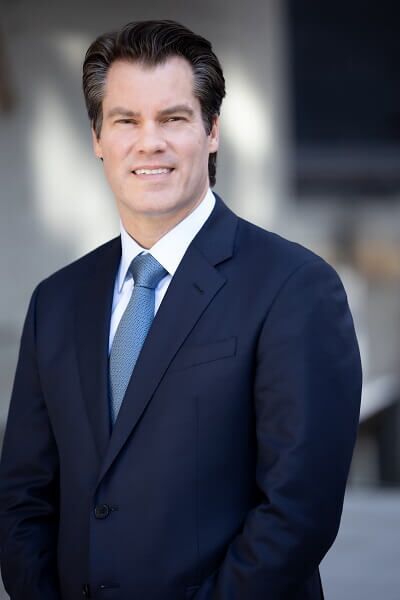
Team Lead
 Contact Nick
Targets of criminal investigations in McKinney, Texas and the surrounding areas of Collin County entrust their future and freedom to Oberheiden, P.C. Our North Dallas law firm is composed of a team with enormous experience and proven results. Our federal criminal defense lawyers have been featured by media stations nationwide. The following is what makes us unique as federal criminal defense attorneys:
- Former Dept. of Justice Prosecutors,
- Former Deputy District Attorneys,
- Federal Criminal Litigators & Trial Attorneys,
- Locally Available, Including on Weekends,
- Licensed in All Federal Courts in Texas,
Our federal criminal defense lawyers don’t have to guess about the tactics of prosecutors. They know because they have worked as prosecutors. When you hire Oberheiden, P.C., you hire lawyers who previously supervised and led federal investigations in North Texas. They understand the process like few others.
Defending Individuals and Entities Accused of Serious Financial Crimes, Conspiracies, and Fraud in McKinney Federal Court
Our North Dallas McKinney federal criminal defense law firm provides guidance and expertise from former government lawyers. They have a deep understanding of federal cases from a prosecutor’s point of view.
Once you’re the focus of a federal investigation, threats to your career, business, financial security, and liberty are real. Fighting state criminal charges is daunting, but federal criminal charges pose a far more serious challenge. In the federal criminal justice system, targets of investigations and indictments must overcome:
- Specially skilled prosecutors;
- Law enforcement agencies with immense resources;
- Different procedural requirements;
- DOJ policies that discourage leniency, and;
- Harsh impact of federal sentencing guidelines.
Recent policy changes in U.S. Department of Justice and the U.S. Attorney General’s Office have further complicated the process of overcoming the specter of criminal and civil liability in federal criminal charges.
Put our highly experienced team on your side

Dr. Nick Oberheiden
Founder
Attorney-at-Law

Lynette S. Byrd
Former DOJ Trial Attorney
Partner

Brian J. Kuester
Former U.S. Attorney
Hon. Kevin McCarthy
55th Speaker, U.S. House of Representatives (ret.)
Government Consultant

Mike Pompeo
Of Counsel
Former U.S. Secretary of State
John W. Sellers
Former Senior DOJ Trial Attorney
Linda Julin McNamara
Federal Appeals Attorney

Nicholas B. Johnson
Former Prosecutor
Roger Bach
Former Special Agent (DOJ)

Chris J. Quick
Former Special Agent (FBI & IRS-CI)
Michael S. Koslow
Former Supervisory Special Agent (DOD-OIG)
Ray Yuen
Former Supervisory Special Agent (FBI)
McKinney Federal Criminal and Healthcare Fraud Defense Attorneys with an Exemplary Track Record
You may have to face a grand jury, defend against federal criminal charges, or protect your interests during a federal investigation. Our nationally known federal criminal defense attorneys provide the expertise in federal procedure and trial practice you will need.
- We Avoided Criminal Charges in Many North Texas Cases;
- We Obtained Probation Outcomes in Federal Felony Cases;
- We Defended Clients in Court, Eastern District of Texas.
Our federal criminal law firm offers a unique combination of highly acclaimed attorneys and expertise on both sides of the aisle in federal criminal cases.
- Conducted many trials and supervised many more;
- Count among our team of experienced attorneys former federal and state prosecutors and former DOJ trial attorneys;
- Persuaded federal judges to deviate from the federal sentencing guidelines and even grant probation;
- Frequently appear on national television and radio programs as experts in federal litigation, civil and criminal procedure, evidence issues, and constitutional issues;
- Highly experienced in federal criminal cases.
Indicted by a Federal Grand Jury in the Eastern District of Texas – Oberheiden, P.C.’s Team of Experienced Former Federal Prosecutors
 Oberheiden, P.C. has several attorneys with significant experience handling federal criminal prosecutions. You may have to face a federal grand jury, defend against federal criminal charges, or protect your interests during a federal investigation. These typically arise from investigations and audits performed by federal law enforcement agencies. The expertise and background of our McKinney federal criminal defense attorney in federal court provides an edge in all federal criminal law matters.
New Federal Law Enforcement Policy Changes Threaten Harsh Consequences for Federal Offenses
When citizens learn they are being investigated by:
- Department of Justice,
- Department of Defense,
- Federal Bureau of Investigation,
- Internal Revenue Service,
- Department of Health and Human Services,
- Drug Enforcement Agency,
- Office of Inspector General, or
- U.S. Attorneys’ Office in Plano (covering McKinney and Collin County).
An investigation means prompt action is necessary. This urgency stems from recent policy changes involving a much harsher approach by the government.
While the Obama Administration had announced a policy to decrease sentences for certain nonviolent drug offenses, Attorney General Jeff Sessions reversed course. At the middle of 2017, Attorney General Sessions directed federal prosecutors to charge the most serious offenses and pursue the harshest sentences. The new policy marks a return to more uniform sentences including mandatory minimums. The policy appears to be even harsher than under the Bush administration. Former Attorney General Holder directed federal prosecutors to scrutinize the details of a case to see if a less serious charge or change from the sentencing guidelines was appropriate. This approach included omitting details about the quantity of an accused’s narcotics that would avoid triggering harsher sentencing terms. Under the new policy, any exception must be justified in writing and approved by a supervising attorney. Pundits contend the lack of specifics about factors meriting an exception may make prosecutors hesitant to veer from the most severe charging and sentencing policies.
Limiting prosecutor discretion and imposing heavier sentences mirrors a focus of law enforcement agencies on the economic costs of crime. Civil and criminal prosecutions take various forms. They include qui tam actions under the False Claims Act (FCA), and felony criminal cases under the anti-kickback statute (AKS). In addition, state and local governments seek repayment related to over-prescription of opioids. These are just a few examples of the financial motivations behind much of the crackdown on federal crimes.
The federal government’s concentration on pursuing costly federal criminal charges has prompted a rising number of arrests, search warrants, investigations, and grand jury indictments. Many people have been ensnared by federal investigations of drug crimes, conspiracy offenses, fraud schemes, and other financial crimes. Our law firm has special expertise in civil and criminal federal healthcare fraud cases involving Medicaid, Medicare, Tricare, and other health insurance programs.
Federal Criminal Offenses That Our McKinney Criminal Defense Lawyers Handle
Our McKinney criminal defense attorneys have the skill and expertise to handle the full spectrum of federal crimes and healthcare fraud involving civil penalties. Here are a few of the cases we handle most often:
Mail Fraud & Wire Fraud. These offenses can be charged when an individual uses false representations through the mail or wire communications (e.g. internet, telephone, media broadcast) to defraud a victim. Many defendants charged with wire or mail fraud will also face conspiracy charges. Our defense to such a charge will depend on the specific facts. One common area we explore is whether there was truly an intent to defraud. A misleading statement alone is not enough for the prosecutor to obtain a fraud conviction. The false representation must be made with the intent to cheat another.
“Pill Mill” Allegations. The opioid epidemic has prompted increased suspicion of doctors, pharmacists, and other medical providers who provide prescription narcotics to treat chronic pain. Our attorneys, as former prosecutors, have insights into how law enforcement uses federal drug conspiracy laws to pursue medical professionals. Our law firm works with top medical experts to explain that the prescribing practices were legitimate and lawful. Oberheiden, P.C. has special expertise in defending against all forms of healthcare fraud.
Federal Tax Fraud & Tax Evasion. Any person who attempts to elude tax obligations or payment of tax can face federal criminal charges. A conviction carries a term of imprisonment up to 5 years, a fine of up to $100,000, and reimbursement for prosecution costs. When charged with tax fraud, you may face charges of making a false statement to government officials, forgery, and making a false claim against the government. One strategy in avoiding a conviction of tax evasion might involve challenging if the accused’s conduct was “willful.” Our attorney may produce evidence that the accused relied on the advice of others.
Federal Drug Conspiracy Charges. Federal drug conspiracy refers to an agreement between two or more people to engage in a drug offense. Federal law enforcement and prosecutors often use conspiracy law to target several parties allegedly involved in the same scheme. Federal drug conspiracy charges often result from federal grand jury indictments based on extensive investigations. A very small role can result in outcomes comparable to those at the center of the conspiracy. The precise circumstance of the alleged conspiracy will dictate the most effective defense. We will examine searches done by law enforcement to determine if any drugs or money were found or seized unlawfully.
Bribery & Public Corruption. Several statutes apply to bribery of public officials. The federal bribery statute forbids corruptly promising, giving, or offering anything of value to a federal public official or appointee with the intent to influence the individual. A common defense to the charge might be to contest that the person who received compensation was a “public official” or if the accused had an intent to influence the benefit’s recipient.
Money Laundering. This offense is charged when money obtained through unlawful means is used to make it appear the funds were obtained legally. An effective defense strategy could include arguing that a reasonable person would not have known the money came from an unlawful source.
Why Clients Want Oberheiden, P.C. on Their Side
Our McKinney lawyers possess extensive experience handling federal criminal defense. Experience is imperative because federal criminal charges differ greatly from state criminal prosecutions. These differences are in civil procedure and evidence rules, harsh sentencing, and limited access to plea bargaining and probation. Dr. Nick Oberheiden, the firm’s founding partner, has widely published on procedural and evidentiary issues. He also taught several courses on these complex topics. Lawyers with our firm have handled many grand jury cases, trials and many DOJ prosecutions before switching sides.
Agents with the FBI, U.S. DOJ, ATF, and other federal law enforcement agencies use skilled agents with access to the best law enforcement tools and techniques. Prosecutors in federal court also tend to have much lighter caseloads. Federal prosecutors have been directed to charge the most serious sustainable charge and pursue a maximum sentence. This limits plea negotiations and leniency. Judicial discretion is also limited by federal sentencing guidelines with harsh mandatory minimums.
We have an impeccable record in federal court. But, we pride ourselves on preventing clients from facing federal criminal charges. When clients retain Oberheiden, P.C. as soon as they are the target of a federal investigation, or a grand jury, we have a long record of success. Quite often, we can shield our clients from felony conviction. A very small percentage of our clients who were subject to a grand jury investigation, an OIG subpoena, or a target letter were prosecuted after we entered the case.
Frequently Asked Questions (FAQs) about Federal Criminal Cases in Collin County
If you are the target of a grand jury or facing federal criminal charges, the best option is to talk to an experienced lawyer about your rights, defenses, and legal options. If you are the target of a federal grand jury investigation, it is crucial to seek legal counsel immediately. Our team has provided answers to a few common questions.
What should I do if I’m indicted?
If facing federal criminal charges, your first step should be to contact a McKinney federal criminal defense attorney. By the time you learn of the case against you, chances are it’s been going on for months, if not longer. Prosecutions by the federal government can take years before reaching trial. The earlier in the process you contact an attorney, the more options there will be to resolve the case in the best way possible. In some cases, a skilled attorney can negotiate with prosecutors before charges are ever filed.
Do I need an attorney if I have received a grand jury subpoena?
An attorney is not mandatory under a grand jury subpoena, however, several reasons exist to obtain legal counsel. Your lawyer can make sure that you are prepared for the types of questions you will be asked. If the subpoena requests documents, your attorney can review and analyze these documents. He or she can advise you if you have a valid basis to refuse to comply, such as marital privilege or attorney-client privilege. Your lawyer can also analyze your situation and help you understand if you are the target of the grand jury or a witness.
What type of federal offense does your law firm particularly focus on handling?
A special focus of our practice are white-collar offenses and, in particular, federal fraud charges like bank fraud, tax fraud, mortgage fraud, and healthcare fraud. Although our attorneys have the experience and expertise to handle the full spectrum of federal criminal offenses, we have developed a national reputation as an industry leader in defending physicians, pharmacies, toxicology labs, and other medical professionals and entities accused of healthcare fraud and related offenses. Our healthcare clients often find they are under investigation related to the following laws:
- False Claims Act (FCA)
- Anti-Kickback Statute (AKS)
- Criminal Healthcare Fraud Statute
- Stark Law
What should a person avoid doing when subject of a federal grand jury indictment?
The most important step when you are indicted for a federal crime is to avoid discussing your case with anyone except your criminal defense attorney. The information you discuss with your lawyer is protected by attorney-client privilege. However, friends, family, and others can be compelled to testify about any incriminating information. Note that communicating information to your attorney in the presence of a third-party could result in a waiver of attorney-client privilege.
If you are the target of a federal investigation, another priority is to avoid destroying documents or altering or deleting electronic files/documents. Federal agents are extremely good at recovering electronic documents. Attempts to destroy or modify such information will only make it appear you are guilty. Further, the destruction of documents or deletion of relevant computer files might result in federal charges of obstruction of justice.
Talk with a Knowledgeable McKinney Federal Criminal Defense Lawyer Today!
If you are facing the prospect of taking on skilled federal prosecutors and harsh federal sentencing guidelines, our law firm offers a free consultation, so we can analyze your situation and protect your rights. Call Oberheiden, P.C. at 888-680-1745 or request a free case evaluation online now to discuss your options. Our North Texas office is located at 4131 N Central Expy #900 in Dallas, Texas 75204.
