


















Washington D.C. False Claims Act Attorneys
Sophisticated Strategies To Protect Business Owners Against OIG, HHS, and FBI Whistleblower Cases
700 12th St NW STE 700
Washington, DC 20005
202-933-9438
Washington D.C. attorney Dr. Nick Oberheiden has represented many clients, individuals, and companies in False Claims Act cases involving allegations of:
- Medicare Fraud,
- Medicaid Fraud,
- Illegal kickbacks,
- Healthcare fraud,
- Pharmaceutical fraud,
- Stark Law and federal False Claims Act violations,
- Violations of critical environmental regulations involving the EPA, and a variety of other matters.
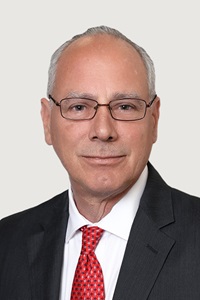
Former Senior DOJ Trial Attorney
 Contact John
Nick’s clients have avoided criminal charges in 100% of his whistleblower cases and he enjoys a reputation as top defense attorney when it comes to convincing the federal government not to intervene in a plaintiff’s case. Nick is among the very few attorneys who convinced a United States District Court Judge to dismiss a federal whistleblower case against his client. Surprisingly, his client was the alleged ringleader of the fraud scheme. All other co-defendants in the case were ordered to remain.
If your business is under investigation or if you received correspondence from state or federal authorities, you should call Nick at 202-933-9438 or contact him online to see what defense strategy he would pursue to protect the integrity of your business.
How Does a False Claims Act Investigation Work?

Click image
to see larger version.
Parties. Plaintiffs (referred to as relators) file whistleblower cases on behalf of the United States claiming that the defendants defrauded and damaged the government. The False Claims Act motivates private citizens to report fraudulent claims of government funds by offering financial rewards for success.
Statutes. Whistleblower complaints are brought under the False Claims Act, 31 U.S.C. Section 3730(b). In a healthcare whistleblower case, for example, relators typically claim that defendants violated Medicare law or Medicaid rules, the Anti-Kickback Statute at 42 U.S.C. Section 1320a-7(b)(2), or federal Stark Law at 42 U.S.C. Sect. 1395nn. In many instances, the alleged covered conduct includes allegations of billing fraud or illegal business relationships.
Agencies Involved. Various agencies oversee whistleblower cases. Among them are the:
- Office of Inspector General (OIG),
- United States Department of Health and Human Services (HHS),
- Agents and case investigators,
- Assistant United States Attorney (AUSA) from the local U.S. Attorney’s Office, and
- Representative from the Civil Division of the Commercial Litigation Branch at the United States Department of Justice-Washington D.C. headquarters.
Dismissal, Settlement or Trial. Depending on the merits of the case and the achievements of the defense team, many whistleblower cases end up being dismissed as meritless. But, if the government sees merit and intervenes (i.e. enters the case and supports the plaintiffs’ cause) the case may end in a settlement with the Justice Department. A settlement may release the defendants from monetary claims under the:
- False Claims Act (31 U.S.C. 3729-3733),
- Civil Monetary Penalties Law (42 U.S.C. 1320a-7a),
- Program Fraud Civil Remedies Act (31 U.S.C. 3801-3812),
- Stark Law (42 U.S.C. 1395nn(g)(3)(4)) and other statutes.
If the settlement fails, the case will go to trial.
10 Things You Should Know About False Claims Act Cases Involving Washington D.C. OIG-HHS

How Do I Know If the Investigation is Civil or Criminal?
Every client in a whistleblower case wants to know if the allegations are civil or criminal in nature. The answer is not always obvious. When the client first approaches an attorney with a CID or other government subpoena, a skilled attorney will have a good idea. To get confirmation or to inquire further, the attorney develops a line of communication with the case agent and prosecutor. In discussing a resolution, a lawyer will ask if there is a parallel criminal proceeding.
What Is a Civil Investigative Demand (CID)?
When the government receives a complaint alleging violations of the False Claims Act and related statutes, it has an obligation to investigate. The government can do so in a number of ways and to different degrees of intensity. Witness interviewing and issuing a so-called Civil Investigative Demand (CID) are examples of a couple. A CID is a government subpoena issued by the DOJ or the Attorney General’s office requesting specific documents. The CID can also be a request for the target to appear for an interview. CIDs are critical tools to determine if allegations have merit.
We Received a Subpoena from the Dept. of Health and Human Services: What Now?
Like a CID, a subpoena from the HHS-OIG is used to gather documents and information to help determine if the government should support the plaintiffs’ complaint. If your business receives government notice such as an HHS-OIG subpoena, you should contact attorneys with a record of handling these types of cases, right away. Be sure your rights are protected and that the case won’t escalate into a criminal one.
Our Business Received Notice from the Department of Justice in Washington D.C. (but We Don’t Operate in D.C.): Any Significance?
Nick Oberheiden has argued and defended whistleblower cases locally at the US Attorney‘s office as well as before the HHS, the OIG, and the DOJ’s headquarters in Washington DC. Every whistleblower case is supervised by DC-based government attorneys, so there is no special significance if you receive a subpoena straight from the District of Columbia rather than from a local branch of the DOJ.
What Is the Significance of an Expert in FCA Cases?
Experts can make a decisive difference when it comes to case resolutions in FCA matters. The government is trying to establish that you “should have known” that what you did was wrong. Attorney Nick Oberheiden has used experts in a number of whistleblower cases to show that his client’s conduct was within the norm and accepted industry standard. Nick introduces case law to the government’s argument that essentially says when two experts (here: the government expert and the defense expert, reasonably and in good faith) disagree, there can be no fraud. This is a very powerful legal conclusion!
What Are the Determining Factors for the Government to Intervene or Decline a Qui Tam Case?
The government will consider a number of factors to determine intervention in a whistleblower case. In general, the government decides if the complaint is convincing and supports the fraud allegations. If the complaint is basically a definition of fraud and does not uphold its claims, the government will not support it. The government can also use subpoenas and interviews of the plaintiffs and potential witnesses to gain insights into the case’s merits. Because the government’s decision can greatly impact the case, you should make sure your attorneys have the experience to convince prosecutors not to intervene against your interests.
What Is the Purpose of an Internal Investigation in a Fraud Defense Case?
At its core, any whistleblower case will claim some form of fraud and misconduct within an organization or between different entities. An internal investigation’s purpose is to self-audit to discover compliance gaps and poor management. This notifies the government the importance of compliance and the owners’ intent to do things right. However, internal compliance audits are tricky in a number of ways and should never be handled by unskilled attorneys. These audits involve highly complex legal questions that are partially based on U.S. Supreme Court case law and partially based on the attorney-client relationship and its exceptions. Most attorneys will never be expected to address these issues during their careers.
What Questions Should I Ask Before Hiring Someone in a False Claims Act Lawsuit?
Lawyers with true experience will appreciate clients asking tough questions before retaining them. Every client facing federal investigation such as a False Claims Act case must understand the severity of dealing with federal law enforcement. The exposure a client may have with a bad defense strategy can be catastrophic. Here are sample questions:
- How many qui tam and whistleblower cases have you handled, and with what success?
- How often have you avoided criminal charges in False Claims Act investigations?
- What would you do in this case?
Then, you must decide whether the answers sound authentic and trustworthy to you.
Can We Switch Attorneys?
Yes, you can get another opinion. When businesses receive notice of an investigation, they often hand the case to an in-house counsel or trusted outside corporate counsel. After a short period of time, clients may realize the matter is too specialized and look for attorneys with specific experience in defending whistleblower allegations. If you or your business are at a point of doubt or simply want to obtain a second opinion, feel free to call Nick at 202-933-9438 for a free and confidential assessment to find out what he would do differently to achieve your goals.
How Much Would It Cost for Nick to Defend Our FCA Case?
Answering the question about legal fees in the abstract is very difficult without knowing more about your business, the fraud allegations, and the stage of the investigation. In general, FCA defense cases can be costly due to the potential exposure and the length it may take to settle or try the case. Clients of Nick Oberheiden can always expect Nick to work with your business’ or personal financial situation.
Founder Attorney-at-Law Former DOJ Trial Attorney Partner Former U.S. Attorney 55th Speaker, U.S. House of Representatives (ret.) Government Consultant Of Counsel Former U.S. Secretary of State Former Senior DOJ Trial Attorney Federal Appeals Attorney Former Prosecutor Former Special Agent (DOJ) Former Special Agent (FBI & IRS-CI) Former Supervisory Special Agent (DOD-OIG) Former Supervisory Special Agent (FBI)Put our highly experienced team on your side
Dr. Nick Oberheiden

Lynette S. Byrd

Brian J. Kuester

Hon. Kevin McCarthy

Mike Pompeo
John W. Sellers

Linda Julin McNamara

Nicholas B. Johnson

Roger Bach

Chris J. Quick

Michael S. Koslow

Ray Yuen
Pharmaceutical False Claims Act
Call 202-933-9438 and Get a Free Consultation