

New Orleans Corruption and Bribery Defense Lawyers
Why have thousands of clients chosen Oberheiden P.C.?
- Only Sr. Attorneys– We don’t employ paralegals, Jr. Attorneys, or Secretaries. You will work directly with a Sr. Attorney who will keep you apprised on a regular basis regarding the details of your case.
- We Know The Government’s Playbook– Many of our attorneys previously worked for the government as federal prosecutors. Understanding the tricks, goals, and strategies of the opposing side gives us an advantage as we prepare our defense.
- We Have Secret Weapons– Our team of Former FBI, IRS, DEA, OIG, and Secret Service agents will use their experience in espionage, business investigations, and cyber forensics to find the nuanced details that can sometimes be the difference between a win or jail time.
- Unrivaled Results– While we have many tools at our disposal, our greatest asset is our high level of experience fighting the government. This experience has given us the privilege of winning over 2,000 cases on behalf of our clients.
I encourage you to compare our experience, results, and team with any local or national firm.
When you’ve been defending clients for as long as we have, there’s no trick we haven’t seen, likely no tactics we haven’t countered and no strategy we haven’t circumvented many times before.
If your reputation, livelihood, freedom, or career is at stake, call us today for a free consultation.
We will help you clearly understand what your options are and the best path forward.
Call now to confidentially discuss the details of your case: 888-680-1745
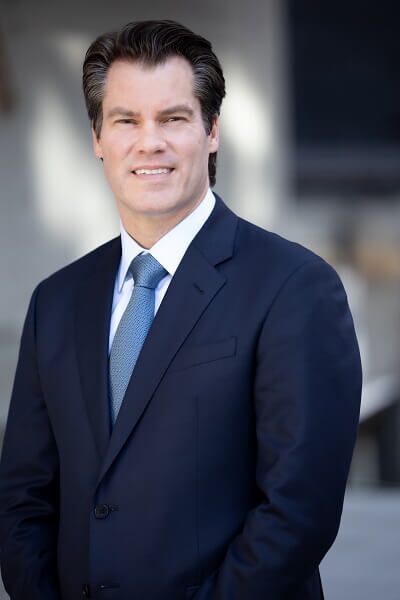
Dr. Nick Oberheiden
We Defend Company Executives, Directors, Public Officials, and Others Accused of Corruption and Bribery in New Orleans
3014 Dauphine Street Suite 100
New Orleans, LA 70117
888-680-1745
Team Lead
 Contact Nick
Federal corruption and bribery charges carry substantial penalties. They can also threaten targets’ careers in both the public and private sectors. Our firm defends company executives, directors, public officials, and others accused of corruption and bribery in New Orleans, and we recommend that you speak with a lawyer promptly if you are facing federal scrutiny.
The Federal Bureau of Investigation (FBI) and U.S. Department of Justice (DOJ) investigate and prosecute these cases on behalf of the federal government. Several federal laws may apply, and defending against corruption and bribery inquiries in New Orleans requires an in-depth understanding of the specific allegations involved. At Oberheiden P.C., not only do our defense lawyers and consultants have extensive experience in private practice, but many previously served as DOJ prosecutors and FBI Special Agents assigned to corruption and bribery cases.
Defense Counsel for Federal Corruption and Bribery Cases in New Orleans
We represent private clients and public officials in all aspects of corruption and bribery defense. Whether you (or your company) is being accused of attempting to pay a bribe or you are being accused of corruption as a public official, we have the experience and insights required to protect you. Our lawyers and former FBI Special Agents provide representation and advice at all stages of federal corruption and bribery cases in New Orleans, including:
- Search Warrants
- Subpoenas and Civil Investigative Demands (CIDs)
- Federal Investigations
- Grand Jury Proceedings
- Pre-Trial and Trial Proceedings
- Appeals
Within our federal corruption and bribery defense practice, we have successfully defended public and private clients against virtually all pertinent statutory allegations. This includes (but is not limited to):
- Foreign Corrupt Practices Act (FCPA) – The FCPA applies to public officials in the U.S., domestic companies doing business abroad, and foreign companies doing business domestically. It prohibits bribes and other corrupt acts intended to influence governmental actions and processes. It also establishes accounting and recordkeeping requirements related to companies’ governmental interactions. FCPA violations can lead to civil or criminal prosecution.
- Bribery or Reward of a Bank Officer (18 U.S.C. Section 215(a)(1)) – Companies and individuals accused of bribing bank officers (essentially, all bank personnel as well as outside representatives) can face criminal charges under 18 U.S.C. Section 215(a)(1). If convicted, company executives and others can face substantial fines and federal imprisonment.
- Offering or Paying a Bribe to a Public Official (18 U.S.C. Section 201(b)(1)) – Offering or paying a bribe to a public official is a federal criminal offense under 18 U.S.C. Section 201(b)(1). The law also applies with respect to candidates and newly-elected officials who have not yet taken office. Violations of Section 201(b)(1) also carry substantial fines and prison time.
- Receiving a Bribe or Illegal Gratuity By a Public Official (18 U.S.C. Sections 201(b)(2) and 201(c)(1)(B)) – Federal law prohibits public officials from demanding, seeking, receiving, accepting, or agreeing to receive or accept any form of bribe or other corrupt payment. This includes payments made to influence official acts, aid in government fraud, or facilitate violations of public officials’ duties.
- Theft of Government Money or Property (18 U.S.C. Section 641) – Public officials and others charged with corruption and bribery in New Orleans can also face charges under 18 U.S.C. Section 641. This federal statute makes it a felony-level offense to use government funds for unlawful purposes or secure fraudulent payments from the government (i.e., pursuant to a corruptly awarded government contract).
Along with these charges, federal prosecutors will often pursue a variety of related criminal charges in corruption and bribery cases as well. When structuring our clients’ defense strategies, our lawyers remain cognizant of the risk that the DOJ may also seek an indictment for conspiracy, money laundering, wire fraud, tax evasion, and other related federal crimes.
Put our highly experienced team on your side

Dr. Nick Oberheiden
Founder
Attorney-at-Law

Lynette S. Byrd
Former DOJ Trial Attorney
Partner

Brian J. Kuester
Former U.S. Attorney
Hon. Kevin McCarthy
55th Speaker, U.S. House of Representatives (ret.)
Government Consultant

Mike Pompeo
Of Counsel
Former U.S. Secretary of State
John W. Sellers
Former Senior DOJ Trial Attorney
Linda Julin McNamara
Federal Appeals Attorney

Nicholas B. Johnson
Former Prosecutor
Roger Bach
Former Special Agent (DOJ)

Chris J. Quick
Former Special Agent (FBI & IRS-CI)
Michael S. Koslow
Former Supervisory Special Agent (DOD-OIG)
Ray Yuen
Former Supervisory Special Agent (FBI)
Defenses to Federal Corruption and Bribery Allegations
Given the multitude of potential charges in federal corruption and bribery cases, avoiding unnecessary consequences requires a comprehensive and strategic approach. While there are several potential defenses to corruption, bribery, and related charges, the availability of these defenses depends heavily on the specific factual and legal issues at hand.
With this in mind, some examples of defenses our lawyers may be able to assert on your behalf include:
No “Intent to Influence”
In most cases, federal corruption and bribery charges against private individuals and businesses require evidence of “intent to influence” or “intent to induce” corrupt action. If federal agents cannot gather the evidence needed to prove a target’s subjective intent, then federal prosecutors cannot pursue charges.
No Actual Influence
It can also be a defense to federal corruption and bribery charges that any promised or consummated payment did not actually influence a bank officer’s or public official’s conduct. Here, however, targets need to be careful, as efforts to influence official acts can still lead to attempt or conspiracy charges in some circumstances.
Routine Governmental Action
The FCPA contains an exception for “routine governmental actions.” Under this exception, it is permissible for private entities to make (and public officials to receive) payments intended to facilitate or expedite governmental actions such as the issuance of permits and licenses or the processing of other governmental applications in some cases. But, stringent requirements apply, and the purpose and legality of the payment at issue must be clear from existing documentation.
Bona Fide Expenditures
The FCPA also contains an exception for “bona fide expenditures.” Under this exception, private entities and individuals can cover travel, lodging and certain other expenses for government officials without running afoul of the statute’s prohibitions. Again, stringent requirements apply, and private and public targets alike must be prepared to affirmatively demonstrate that any questioned expenditures comply with the law.
Procedural Mistakes
In addition to substantive defenses, private and public targets can also defend against corruption and bribery allegations by exposing procedural issues with the government’s investigation. Impermissible searches and seizures, subpoenas that are overly broad, politically-motivated inquiries, and various other issues can all provide opportunities to pursue favorable out-of-court resolutions.
FAQs: Fighting Corruption and Bribery Allegations in New Orleans
Should I Engage Defense Counsel if My Company Under Investigation for Public Corruption or Bribery?
If your company is under investigation for public corruption or bribery, your first step should be to engage defense counsel. You will want to resolve the investigation before it leads to charges if at all possible. By engaging defense counsel to deal with the FBI or DOJ during its investigation, you can mitigate the risk of your company (and perhaps you personally) receiving a subpoena to appear before a federal grand jury on criminal corruption or bribery charges.
As a Public Official, What Should I Do if I am Under Investigation for Accepting a Bribe?
If you are a public official in New Orleans and you are facing a federal bribery investigation, you need to speak with a lawyer who has experience representing clients in your situation. At Oberheiden P.C., we have extensive experience representing government officials in federal inquiries. Additionally, as former DOJ prosecutors and FBI Special Agents, many of our defense lawyers and consultants have first-hand knowledge of the government’s investigative priorities, tactics, and practices.
What Constitutes a “Bribe” Under Federal Law?
In broad terms, a “bribe” is any form of payment (or offer of any form of payment) made in an attempt to influence an official act. This includes payments in cash and in kind. However, not all payments to officials are criminal in nature, and determining whether bribery allegations are warranted requires an in-depth assessment of the circumstances surrounding the transaction (or proposed transaction).
Crucially, a bribe can occur even if no money or property changes hands. Under federal law, offering or agreeing to make a prohibited payment also constitutes a bribe and subjects the parties involved to the same penalties that apply to consummated transactions.
What Constitutes “Public Corruption” Under Federal Law?
The FCPA and other federal laws establish varying definitions of “public corruption.” Generally speaking, however, most federal public corruption investigations focus on three specific types of scenarios: (i) bribes paid to influence official acts; (ii) bribes paid to cause public officials to aid, collude in, or allow government fraud; and, (iii) bribes paid to induce public officials to violate their lawful duties.
What are the Penalties for Public Corruption and Bribery in Federal Cases?
The penalties in public corruption and bribery cases depend on the specific charges filed and whether these charges are civil or criminal in nature. In civil cases, targets can face fines imposed on a per-violation basis (which can easily add up to hundreds of thousands or millions of dollars). In criminal cases, targets can face both substantial fines and federal incarceration—with potential sentences ranging from 2 to 30 years.
Speak with a Federal Corruption and Bribery Defense Lawyer in New Orleans
If you need defense counsel for a federal corruption or bribery case in New Orleans, we encourage you to contact us promptly for a complimentary initial consultation. Call 888-680-1745 or send us your contact information online to speak with a lawyer in confidence as soon as possible.
